Parliament: No Entry To Foreigners And Public Servants?
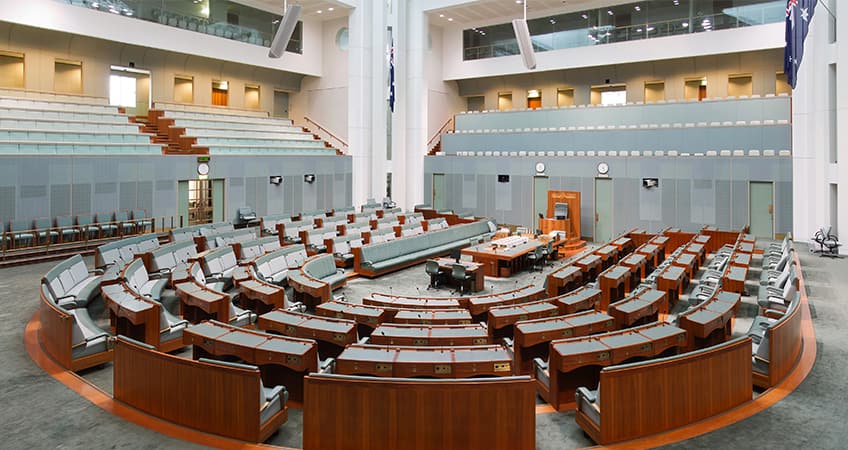
Photo Credit: JJ Harrison
The disqualification of Hollie Hughes from serving in the Senate raises some very troubling questions that we, as a country, have to grapple with urgently.
Coming on top of the dual citizenship kerfuffle, Ms Hughes has been disqualified because she took a paid position for the government after the election. And now newly sworn in Greens Senator Andrew Bartlett may be entangled because he had a university position at the time.
Just who do we think should be allowed to serve in our parliaments? Who has a legitimate voice in our democracy? If our Constitution, as read by the current High Court, excludes dual citizens, public servants, academics, local government officers and doubtless many others from being legitimately elected to federal parliament, who does this leave?
The clear message, in the broader context, is that politics is essentially the exclusive plaything of business, of for profit corporations.
The broader context includes the ongoing attacks on not-for-profits and charities by governments of both stripes, working hard to remove the right to protest or even to engage in lobbying and still be able to access tax concessions. It includes the criminalisation of non-violent protest. It includes the negotiation of trade deals which enable corporations to sue governments over policies which damage their ability to make unfettered profits. It includes the privatisation of so many government services that the relationship between citizen and government has become one of customer and service provider in which we, the citizens, have no capacity to play any active role.
And, of course, it includes the outright rejection of the very idea of an official voice in our politics for First Nations people as “not desirable”.
Participation in our democracy has been narrowed to turning up once every few years to vote – and to vote for an increasingly circumscribed group of people. Don’t nominate for election if you’ve demonstrated your commitment to public service or ideas or education. Don’t try to lobby unless you’re representing a major corporation. Don’t even think about protesting government decisions.
We are left with an increasingly deep democratic deficit, with more and more people turning off from politics altogether as they are told it’s not for them, with more and more decisions that matter to us all being taken out of our hands.
The great danger, of course, is that this will lead to increasing numbers of people turning to the anti-politics of the extreme right, with its simplistic answers and its misdirection of anger away from the corporations towards a scary other.
The only way to prevent that is to work damn hard to create a more attractive, more inclusive politics – involving people across the board in decisions that matter.
Perhaps the place to start is with our 120 year old Constitution? How about we start convening meetings across the country where we the people can begin rewriting this document which was written before anyone alive today was born, in a world unrecognisable from our own?
This might seem like a long bow to draw from Hollie Hughes’ disqualification, but aren’t these the kinds of questions we need to start asking?
Who is our democracy for?
